
Menu
Samantha
September 30, 2026
Even in fourth grade, I had students come into my classroom still struggling with place value and regrouping. Some forgot to add the extra ten. Others added 5 + 7, got 12, and wrote the 1 in the ones place and the 2 in the tens place. They knew parts of the procedure, but they didn’t fully understand what was happening when they regrouped.
Before we could tackle more challenging problems, we often had to go back to the basics.
Whether you’re introducing these 2-digit addition with regrouping strategies to second graders or reteaching them to older students, that foundational understanding matters. If students don’t understand how to exchange 10 ones for 1 ten, regrouping hundreds and thousands will be even harder. Sometimes, revisiting those earlier skills is exactly what students need before they’re ready to move forward.
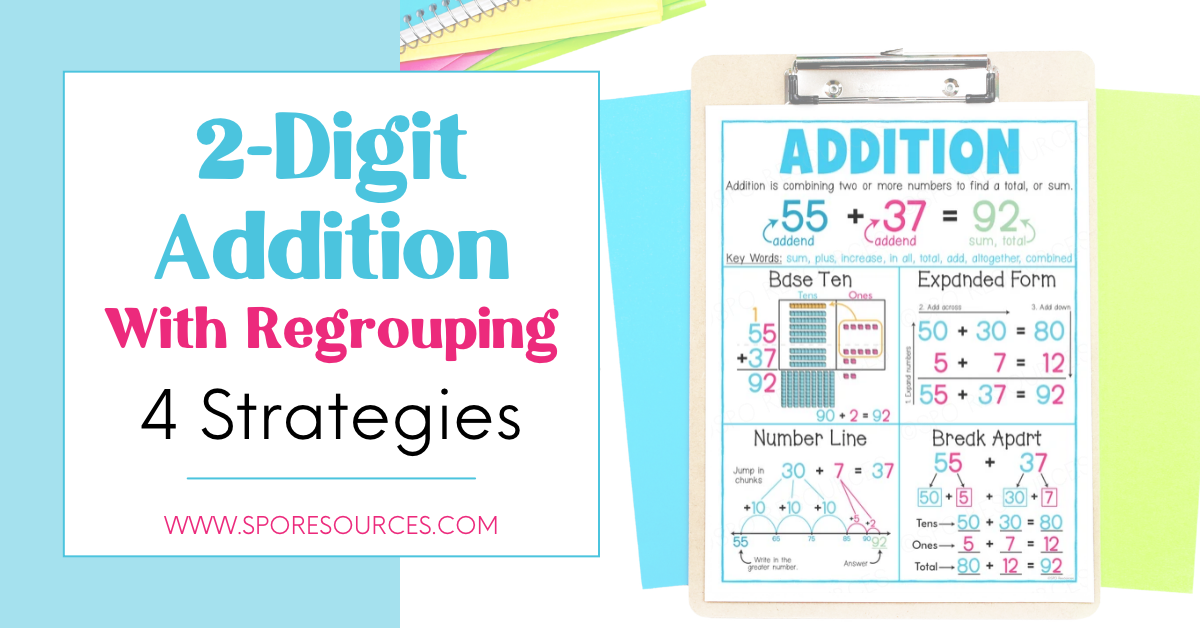
We’ll use 55 + 37 to explore four 2-digit addition with regrouping strategies: base-ten blocks, expanded form, open number lines, and the break-apart strategy.
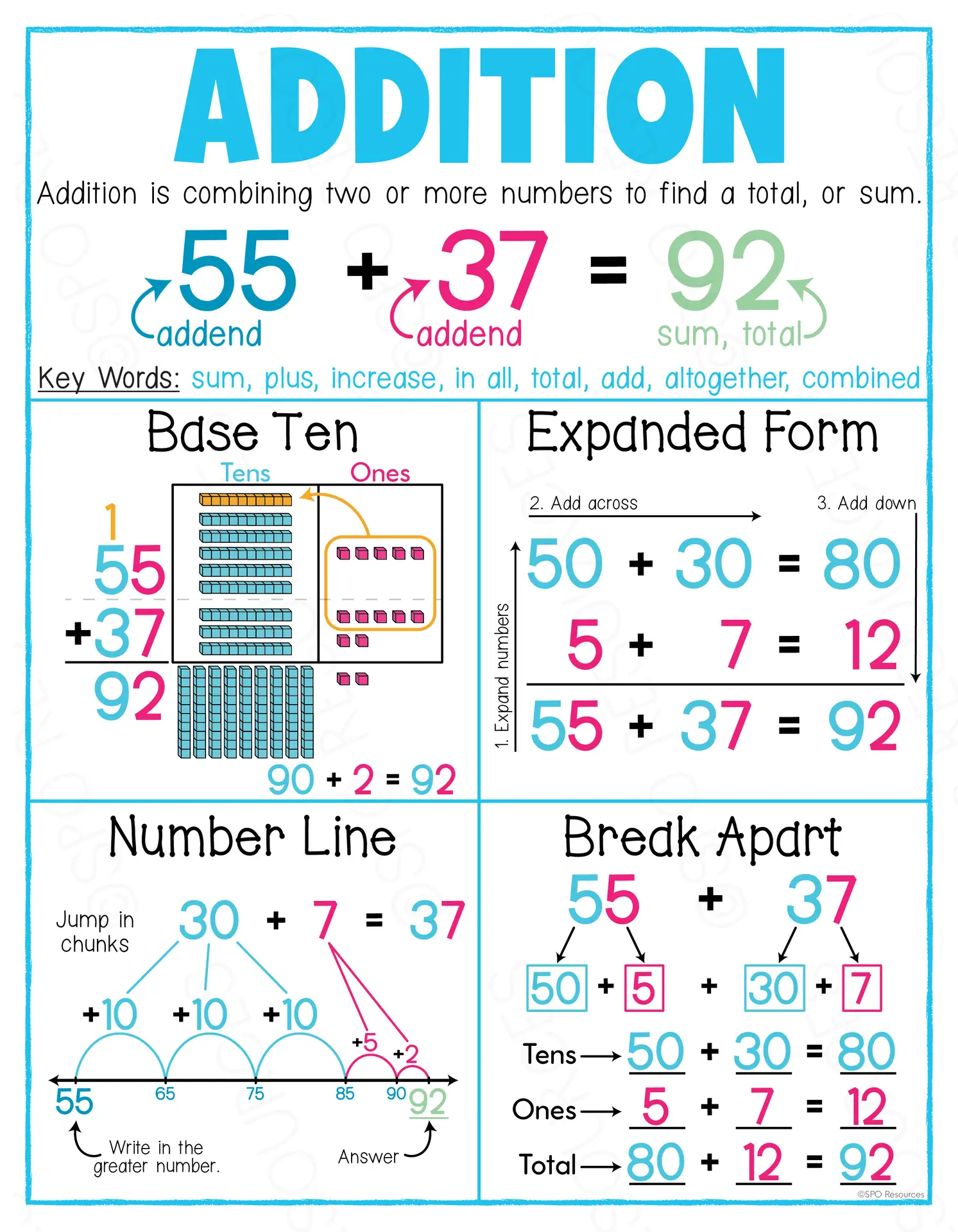
Before introducing these 2-digit addition with regrouping strategies, take a minute to check whether your students understand place value. Can they explain that 55 has 5 tens and 5 ones, while 37 has 3 tens and 7 ones?
Then, ask them what happens when they combine the ones and get 12. Can they explain why 12 ones is the same as 1 ten and 2 ones?
If they’re unsure, that’s where I’d start. A little extra time reviewing place value can help students understand why they’re regrouping instead of simply memorizing when to carry the 1.
Of the 2-digit addition with regrouping strategies, base-ten blocks are the one I like to start with. Students can move the pieces themselves and see exactly where that extra ten comes from.
Let’s solve 55 + 37 using base-ten blocks.
Step 1: Model both numbers.
Start by representing each number with base-ten blocks.
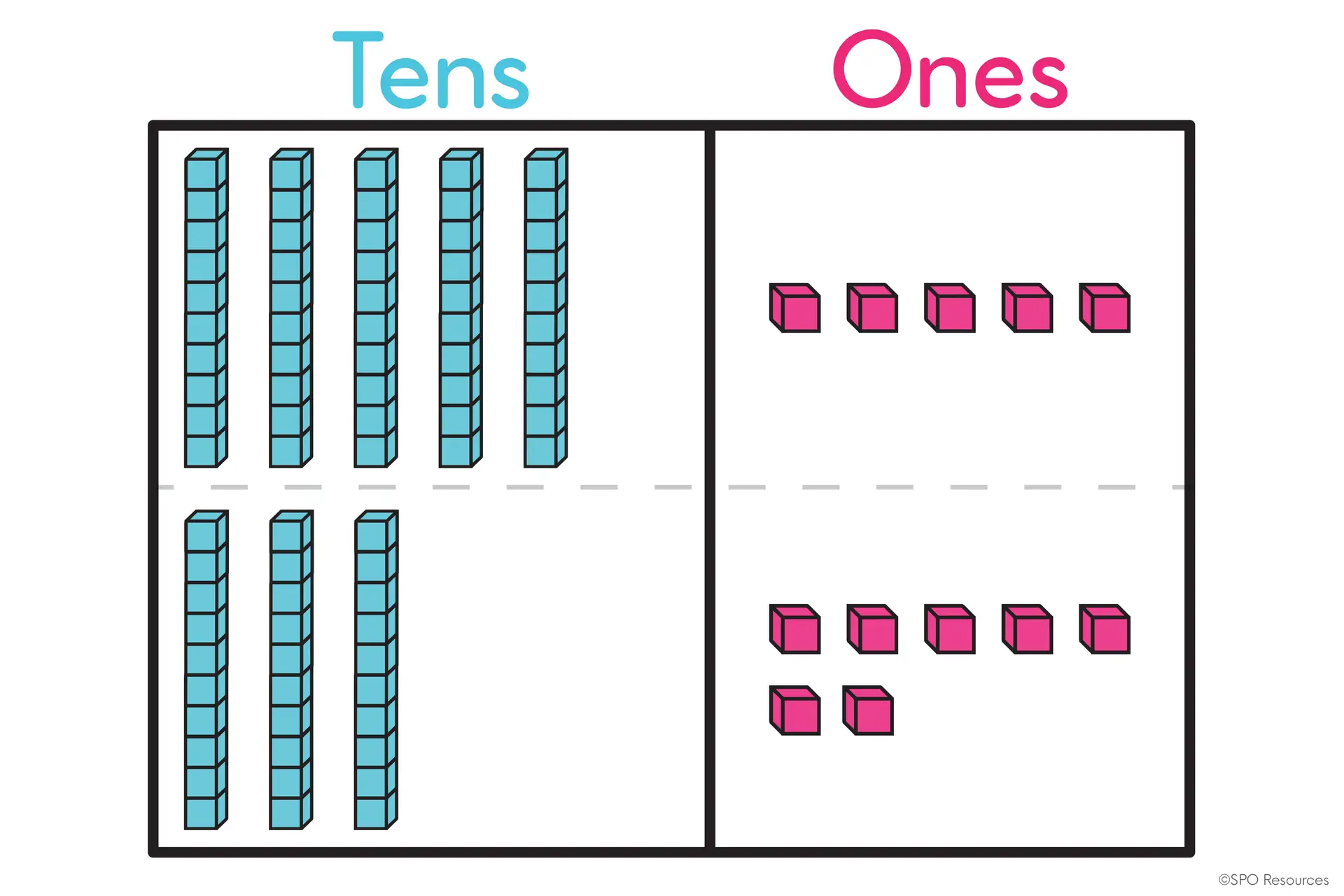
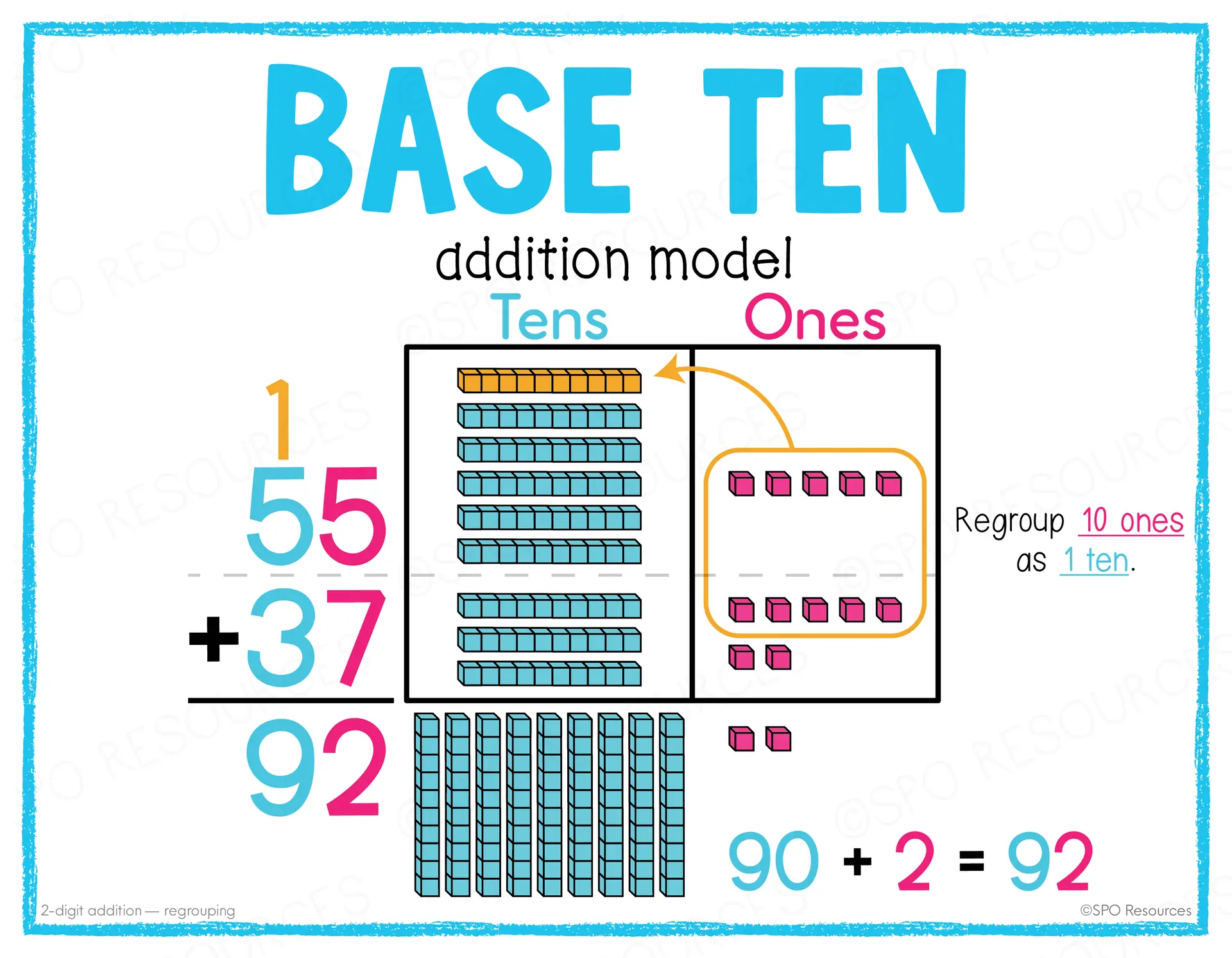
For 55, you’ll need 5 tens rods and 5 ones cubes. For 37, you’ll need 3 tens rods and 7 ones cubes.
Step 2: Combine the ones and regroup.
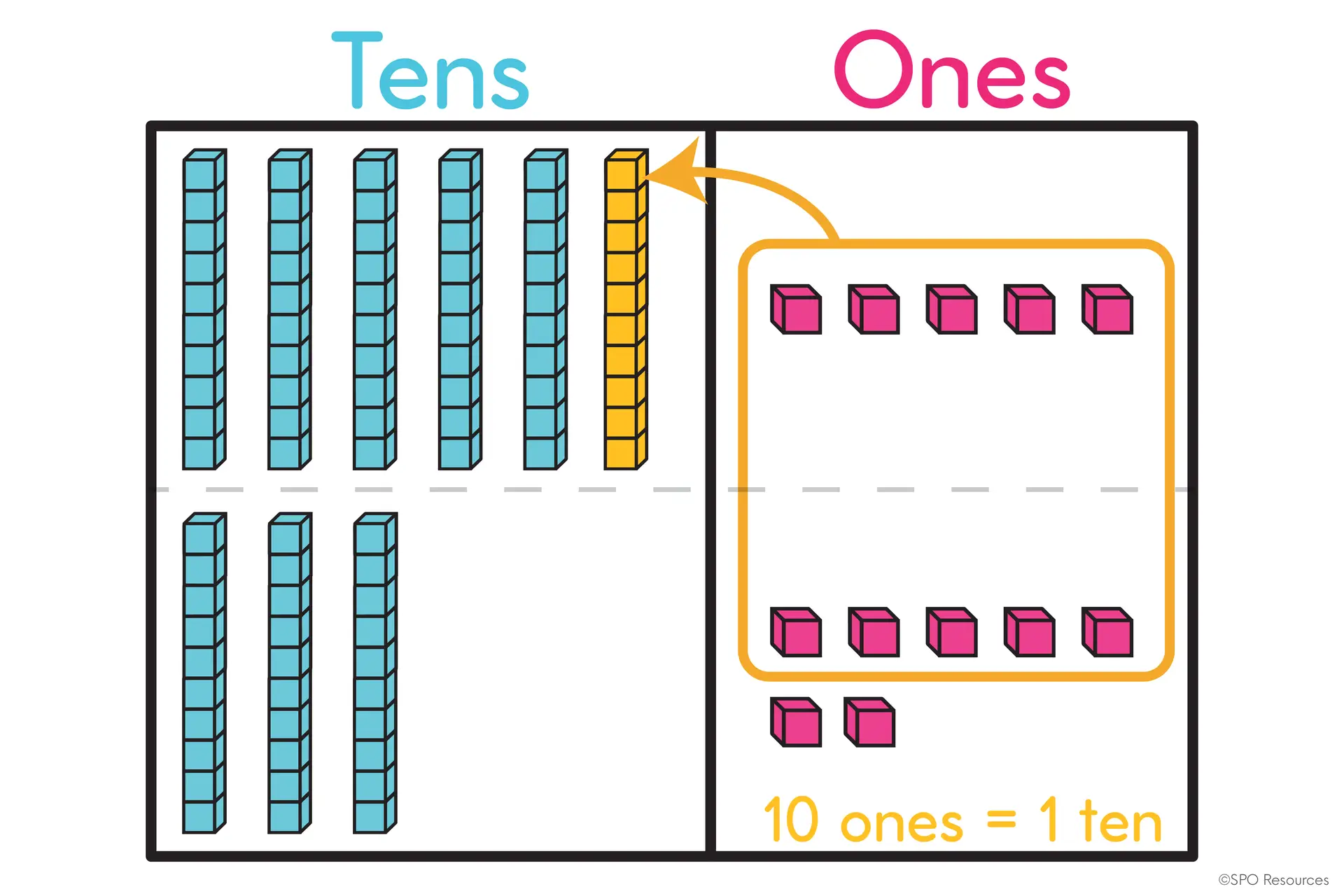
Start in the ones place. When we combine 5 ones and 7 ones, we get 12 ones.
Since we have more than 10 ones, we can regroup 10 of those ones into 1 ten. This leaves us with 2 ones.
Move that new ten into the tens column.
Step 3: Combine the tens.
We now have 5 tens from our first number, 3 tens from our second number, and 1 additional ten from regrouping.
5 tens + 3 tens + 1 ten = 9 tens
We have 9 tens and 2 ones, so our answer is 92.
Regrouping means exchanging 10 ones for 1 ten, not just carrying a 1.
If you’re introducing regrouping for the first time or have students who need additional visual support, I’ve put together a separate tutorial that walks through this strategy in more detail.
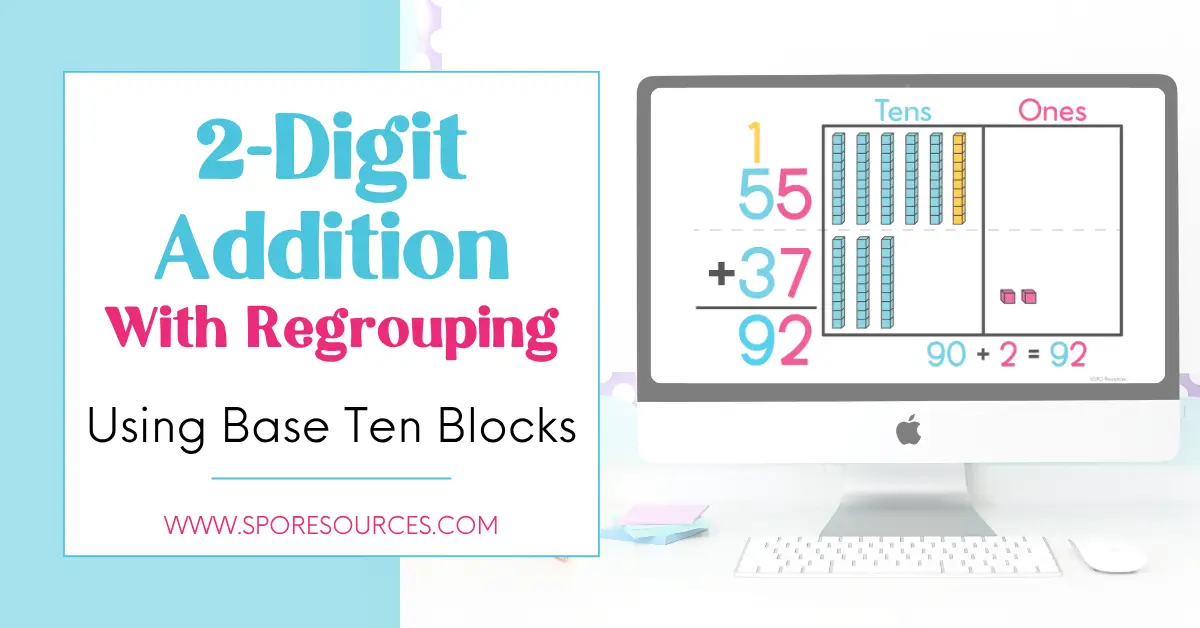
How to Teach 2-Digit Addition With Regrouping Using Base Ten Blocks
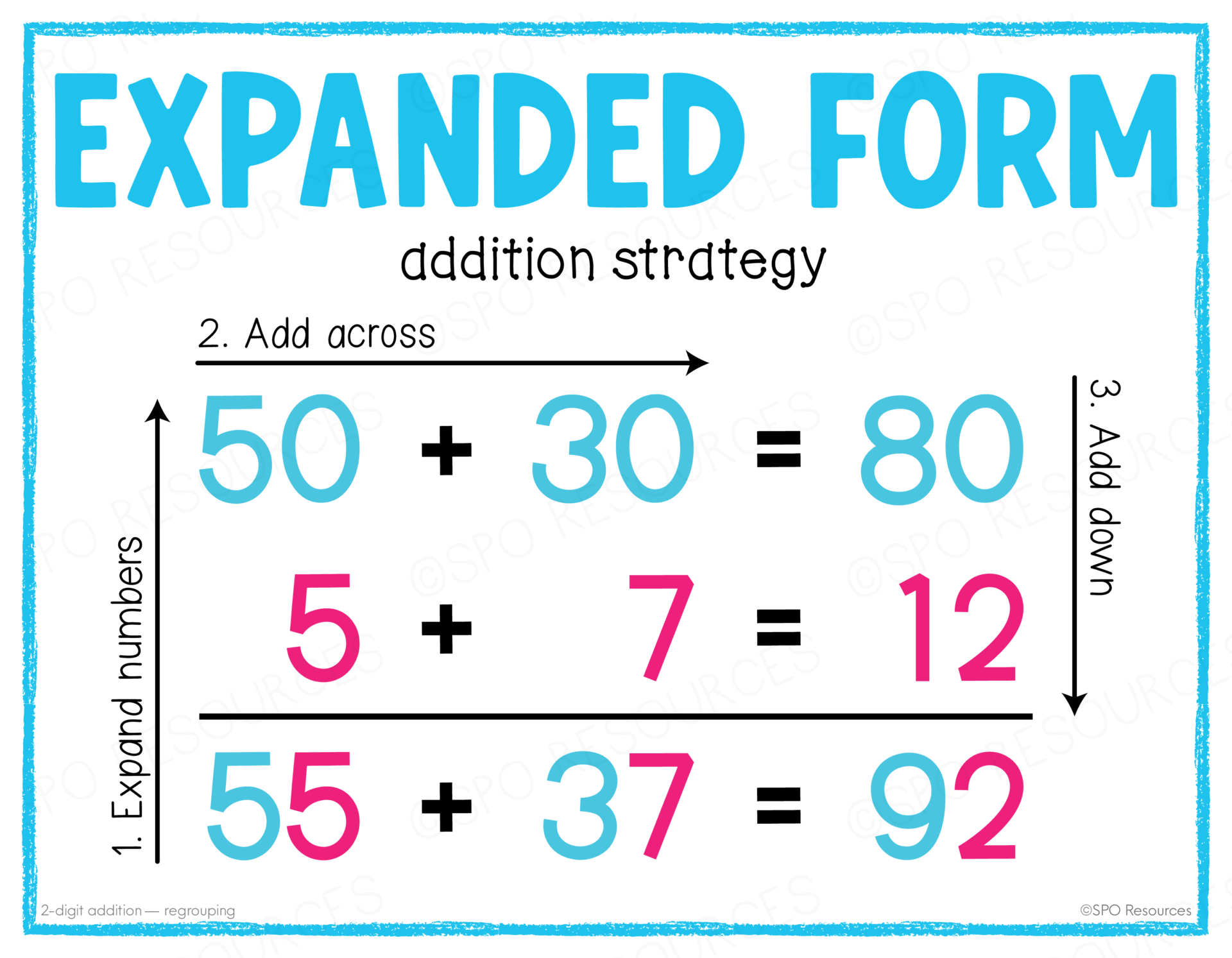
With expanded form, students can take the place-value thinking they practiced with base-ten blocks and put it on paper. They break each number into tens and ones before adding.
Let’s solve 55 + 37 using expanded form.
Step 1: Expand both numbers.
Start by writing each number in expanded form.
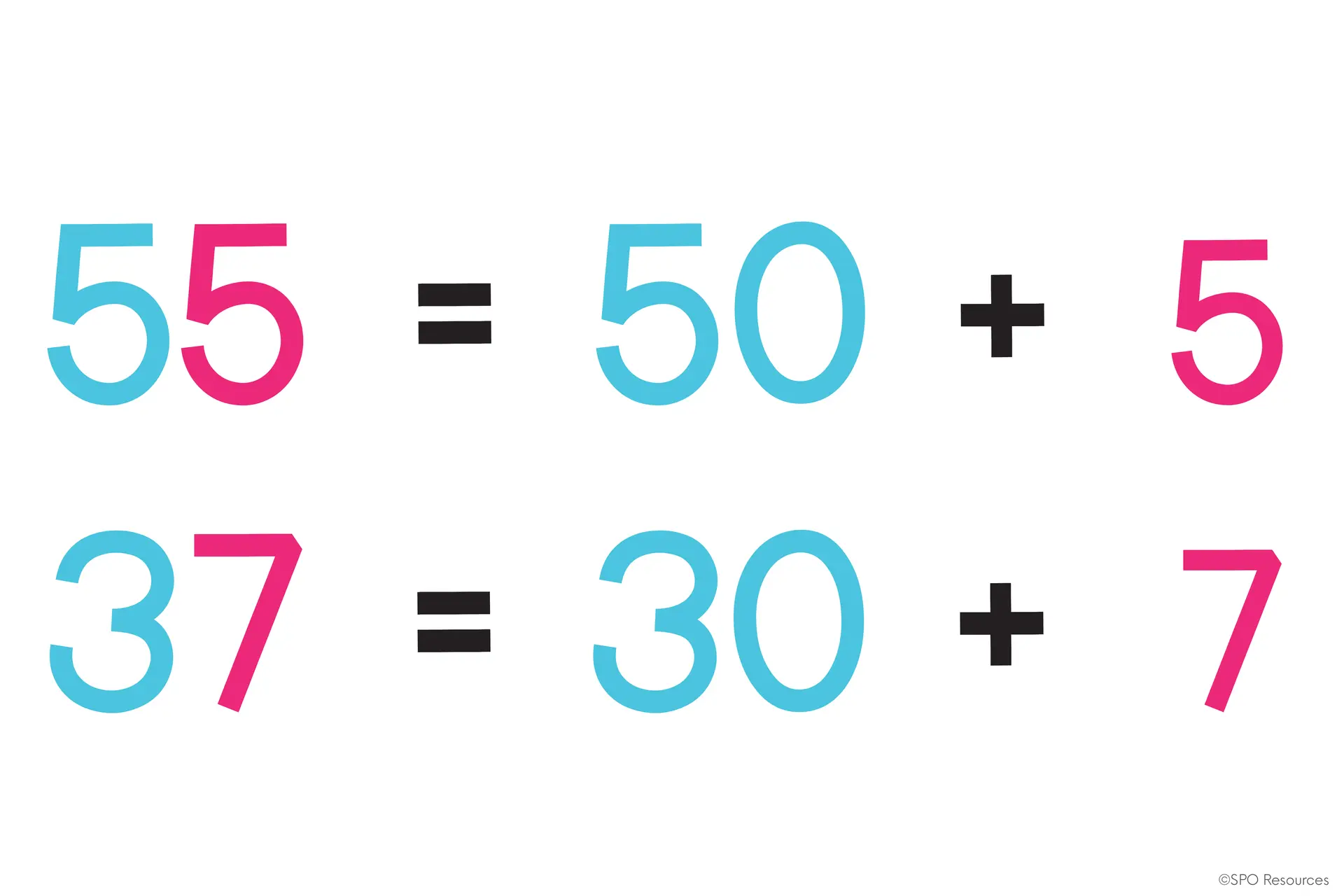
55 = 50 + 5
37 = 30 + 7
The number 55 has 5 tens (50) and 5 ones. The number 37 has 3 tens (30) and 7 ones.
Step 2: Add the tens and ones separately.
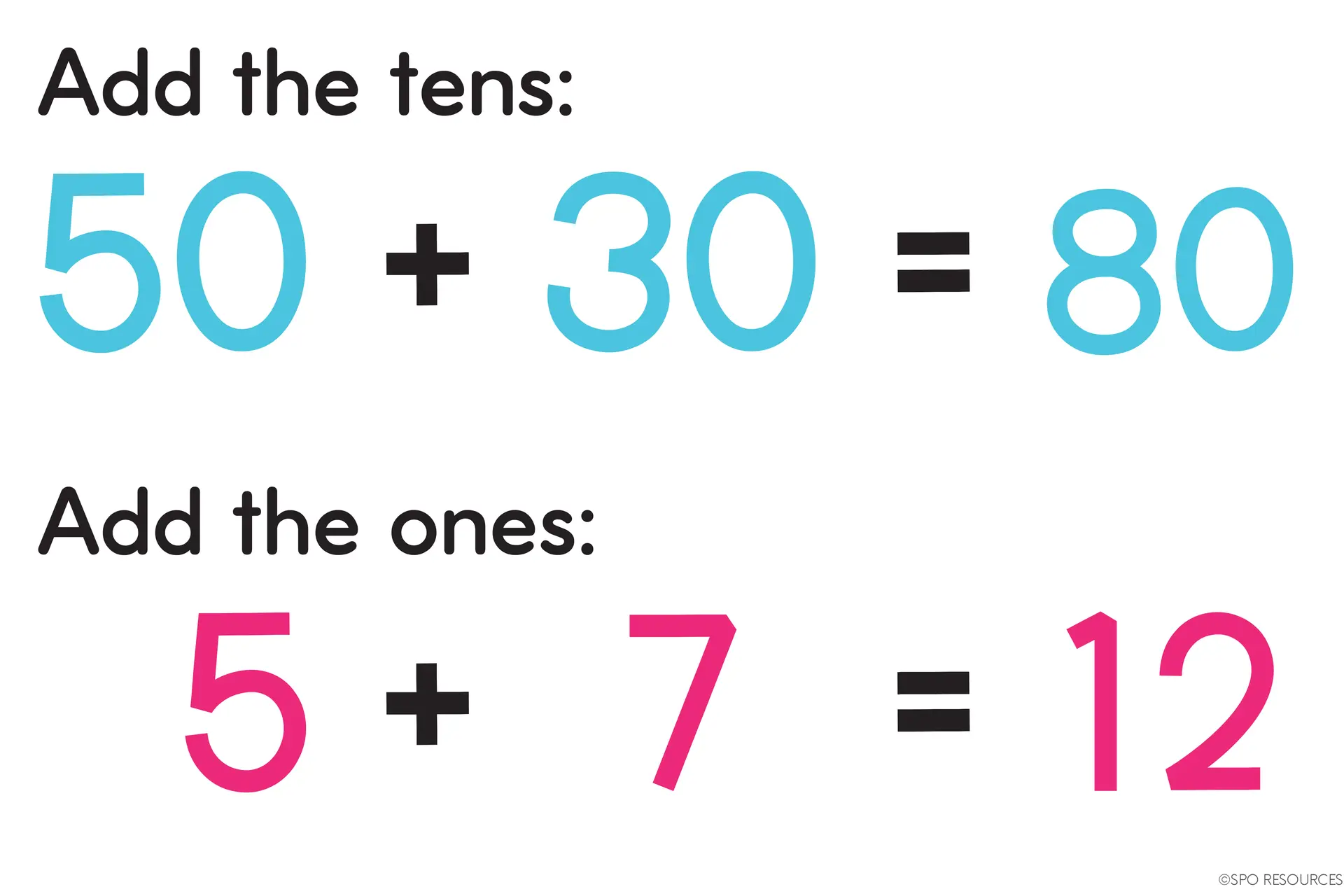
Add the tens:
50 + 30 = 80
Then, add the ones:
5 + 7 = 12
Step 3: Combine the partial sums.
Now that we’ve added the tens and ones, combine the two partial sums to find the total.
80 + 12 = 92
If you’re comparing 2-digit addition with regrouping strategies, expanded form can be a helpful next step for students who understand base-ten blocks but aren’t quite ready for the standard algorithm. They’re still working with tens and ones, but now they’re showing their thinking with equations instead of blocks.
The open number line looks different from the other 2-digit addition with regrouping strategies because students add by making jumps instead of working in columns. They can break the second number into smaller parts and add them one at a time.
Let’s solve 55 + 37 using an open number line.
Step 1: Start with the greater number.
Start at 55, the greater number, and add 37 in chunks.
Step 2: Add the tens.
The number 37 has 3 tens, which equals 30.
Instead of adding 30 all at once, we’ll make three jumps of 10.
Start at 55 and jump forward 10 to reach 65. Make another jump of 10 to reach 75, and then one more jump of 10 to reach 85.
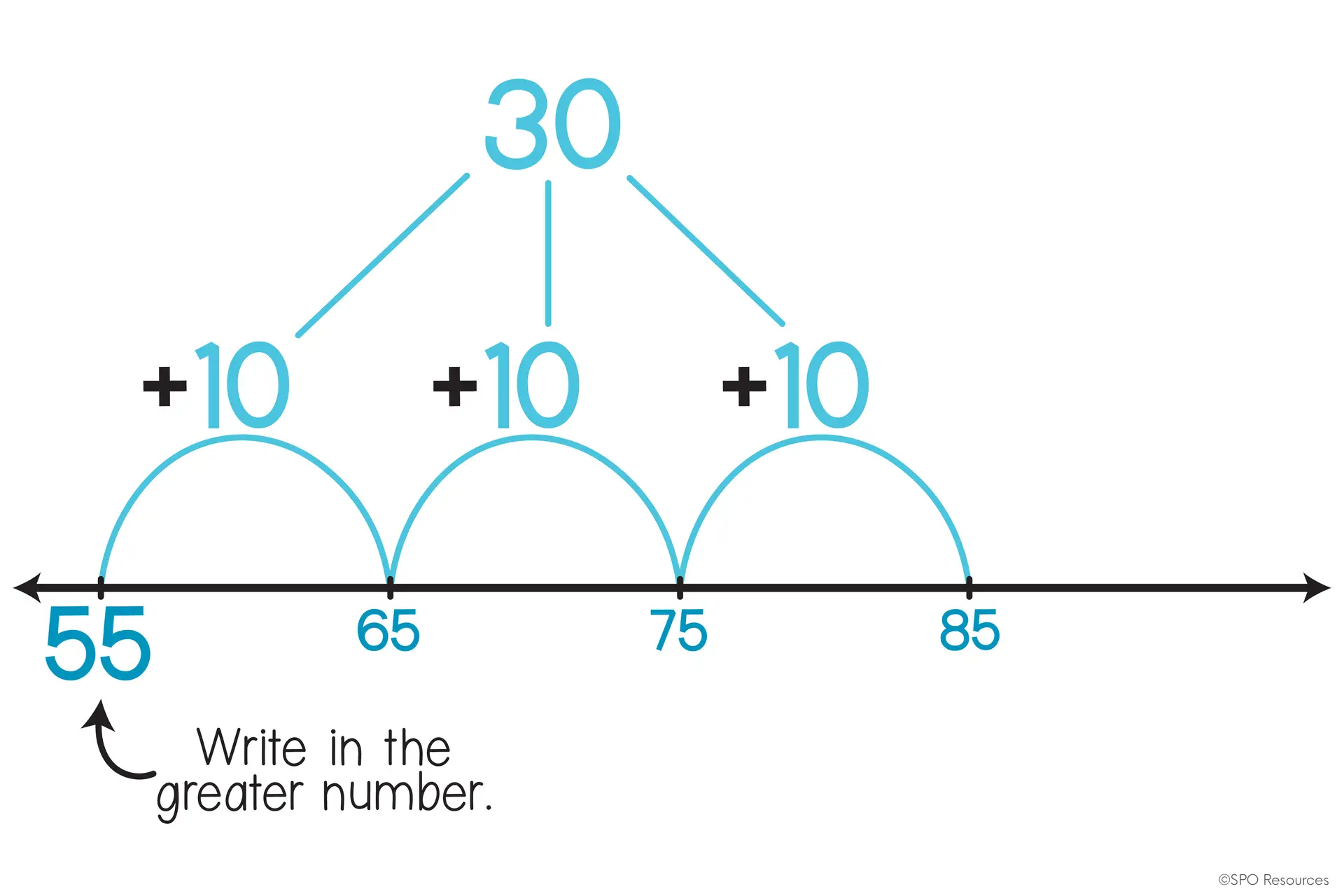
We’ve now added 30, so we have 7 more to add.
Step 3: Add the ones.
We’re currently at 85, and we still need to add 7.
Break 7 into 5 + 2 so we can reach a friendly number first.
Make a jump of 5 from 85 to 90. Then make one final jump of 2 to reach 92.
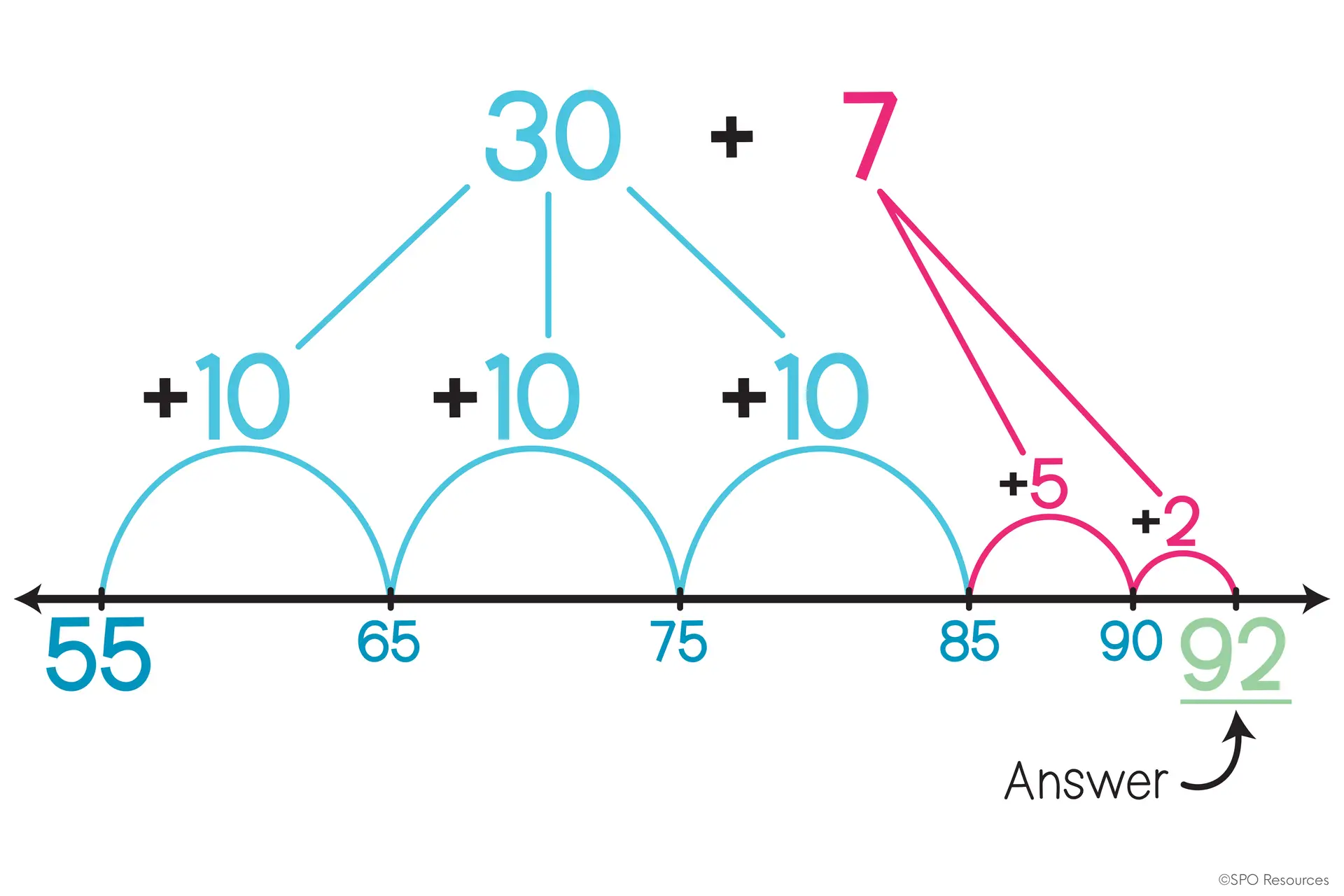
Our answer is 92.
When teaching addition with a number line, encourage students to look for friendly numbers that make adding easier.
For example, breaking 7 into 5 + 2 allows us to reach 90 before adding the remaining 2.
As students become more comfortable with the number line strategy, they can experiment with larger jumps. Some may prefer to make one jump of 30 instead of three separate jumps of 10.
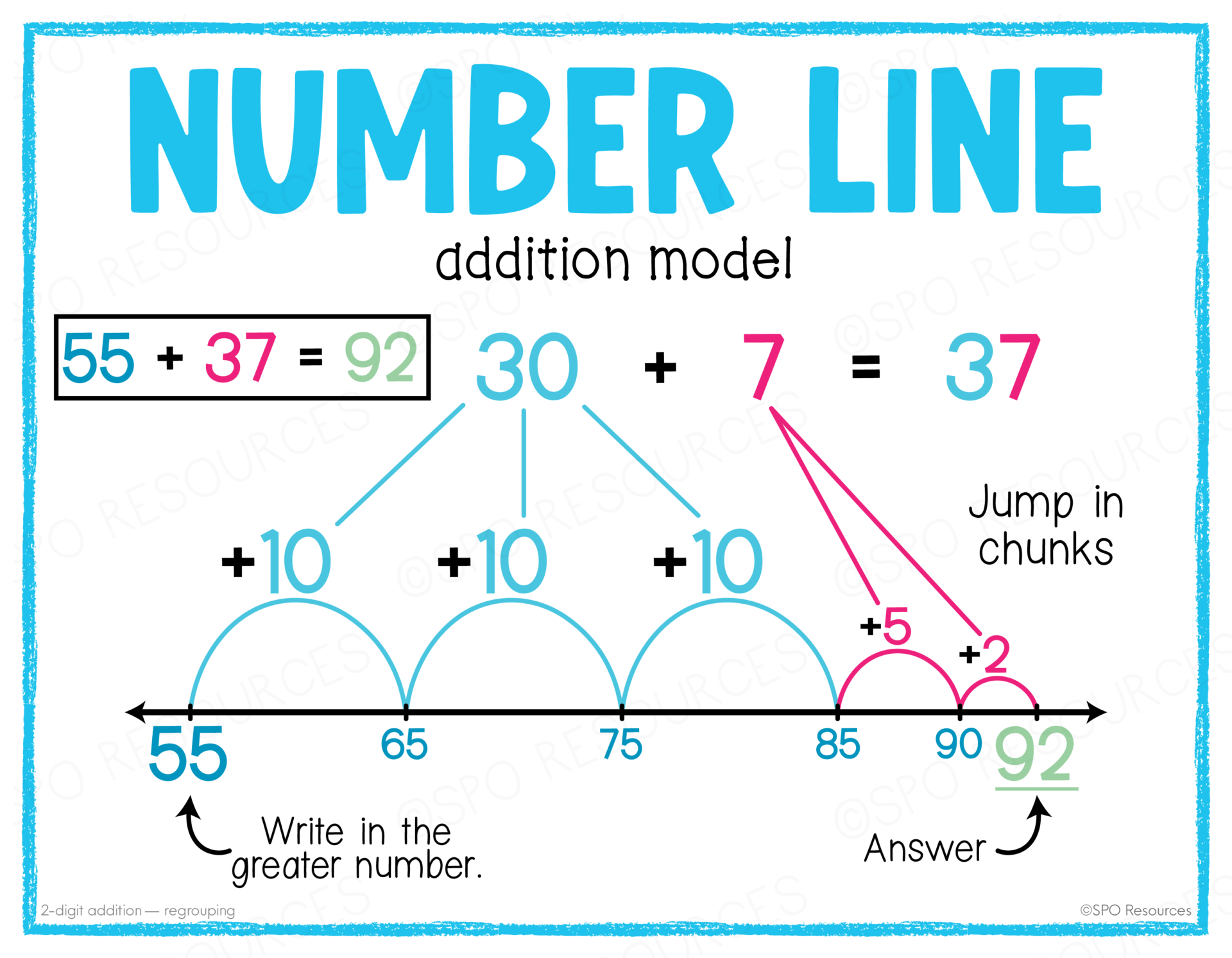
The break apart strategy is similar to expanded form because both involve breaking numbers into tens and ones.
The main difference is how students organize their work. With expanded form, we write numbers as expanded equations and add across. With break apart, we use branching diagrams to visually separate each number into its parts before adding them together.
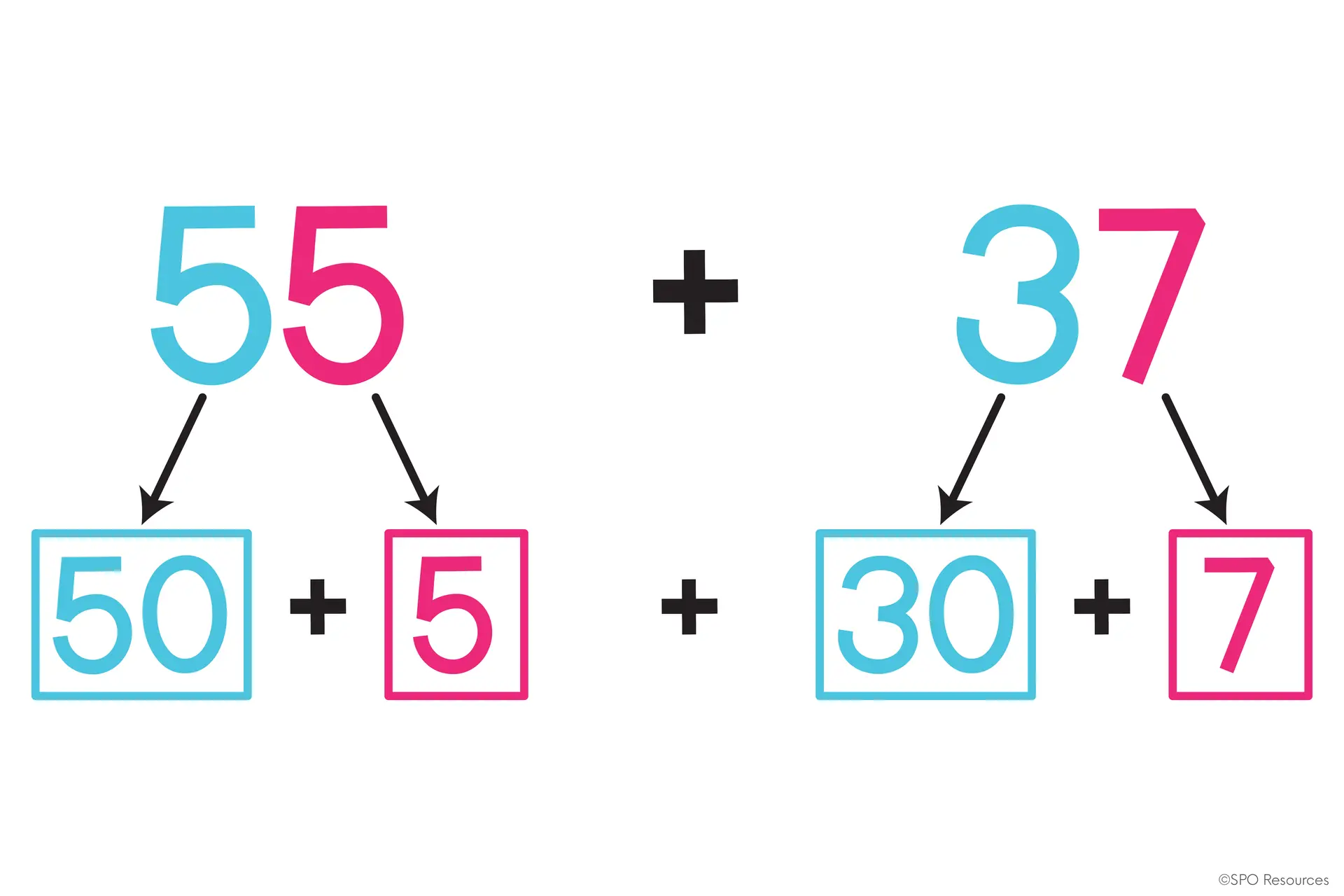
Let’s solve 55 + 37 using the break apart strategy.
Step 1: Break apart both numbers.
Start by breaking each number into its tens and ones.
55 becomes 50 and 5.
37 becomes 30 and 7.
You can draw two branches underneath each number to show how it breaks apart.
Step 2: Add the tens.
Now, add the tens from both numbers.
50 + 30 = 80
Step 3: Add the ones.
Next, add the ones.
5 + 7 = 12
Step 4: Combine the partial sums.
Finally, add the tens and ones together to find the total.
80 + 12 = 92
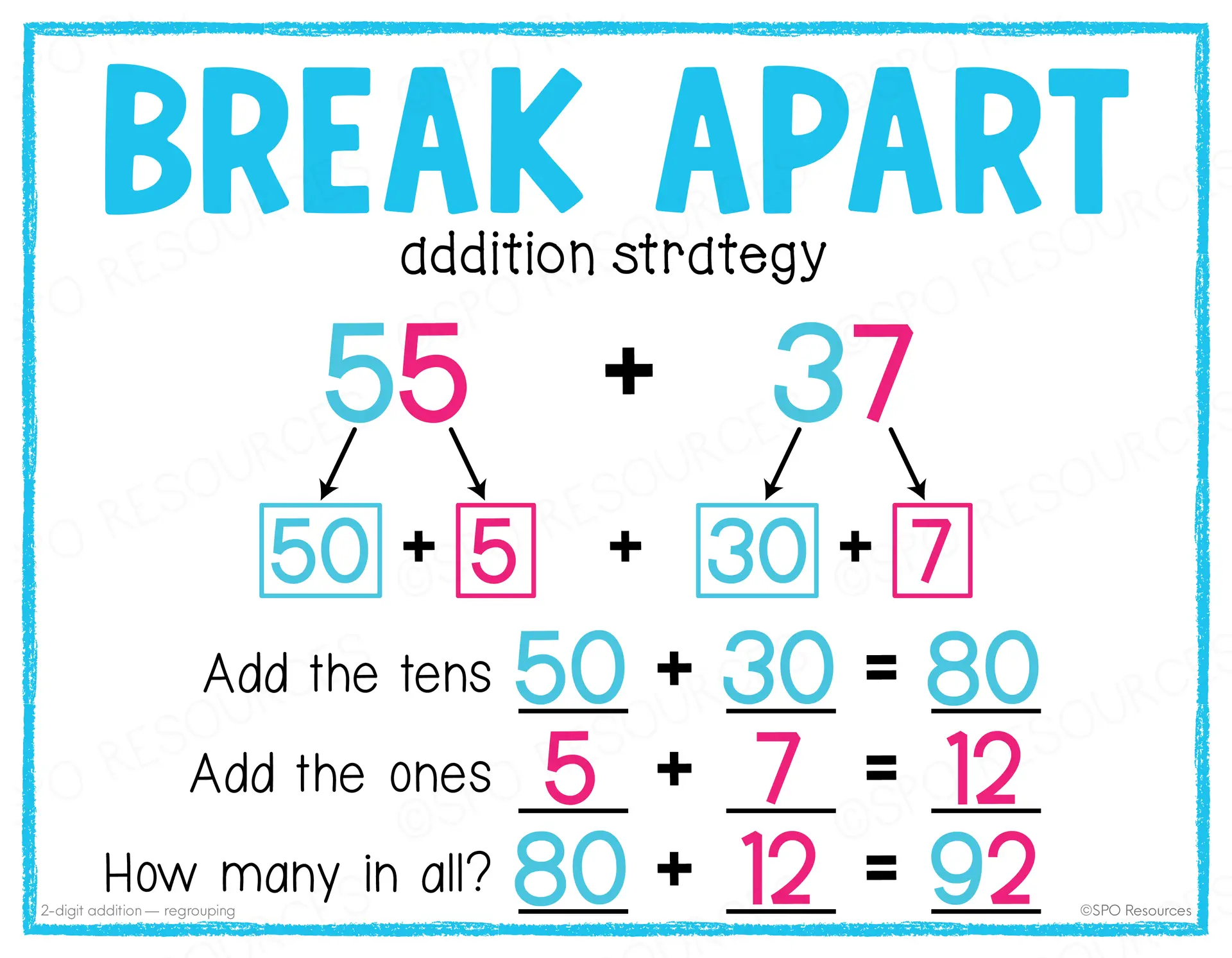
Use different colors for the tens and ones, such as blue for tens and pink for ones.
Keeping the place values color-coded can help students visually track which parts of the numbers belong together as they move through each step.
This can be especially useful when students are first learning how to decompose numbers or when you’re reviewing the strategy during small-group instruction.
You don’t need to introduce all four strategies at once. If students are struggling to understand regrouping, start with base-ten blocks so they can see how 10 ones become 1 ten. Expanded form and the break-apart strategy can help students record their place-value thinking, while a number line may work well for students who are comfortable adding in jumps.
After trying a few 2-digit addition with regrouping strategies, you may find that some students still need more practice with base-ten blocks. The digital 2-digit addition with regrouping activity gives them a chance to move the pieces themselves and connect their models to written computation.
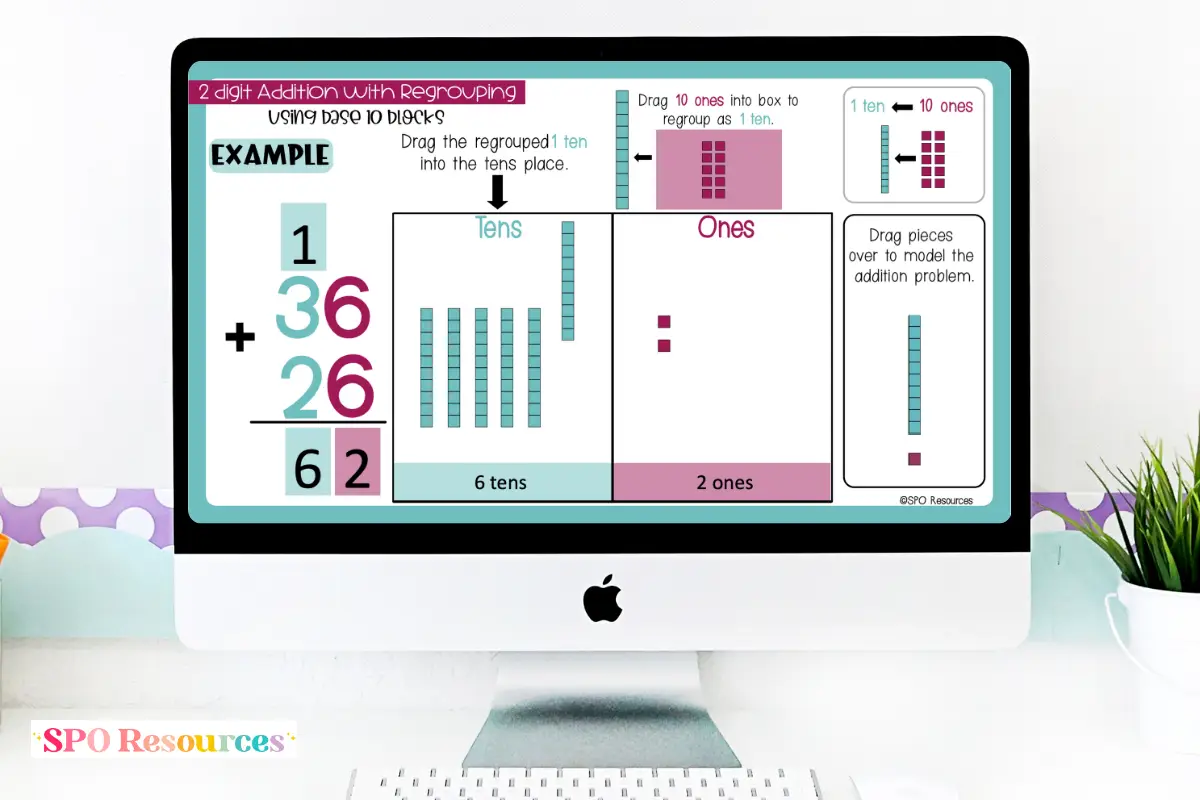
This can be used during small groups, math centers, intervention, or additional practice after introducing the base-ten strategy.
Even after students understand a strategy during a lesson, they may still need a reminder when it’s time to work independently. Having a visual reference on your math wall or in their notebooks gives them somewhere to look when they get stuck.
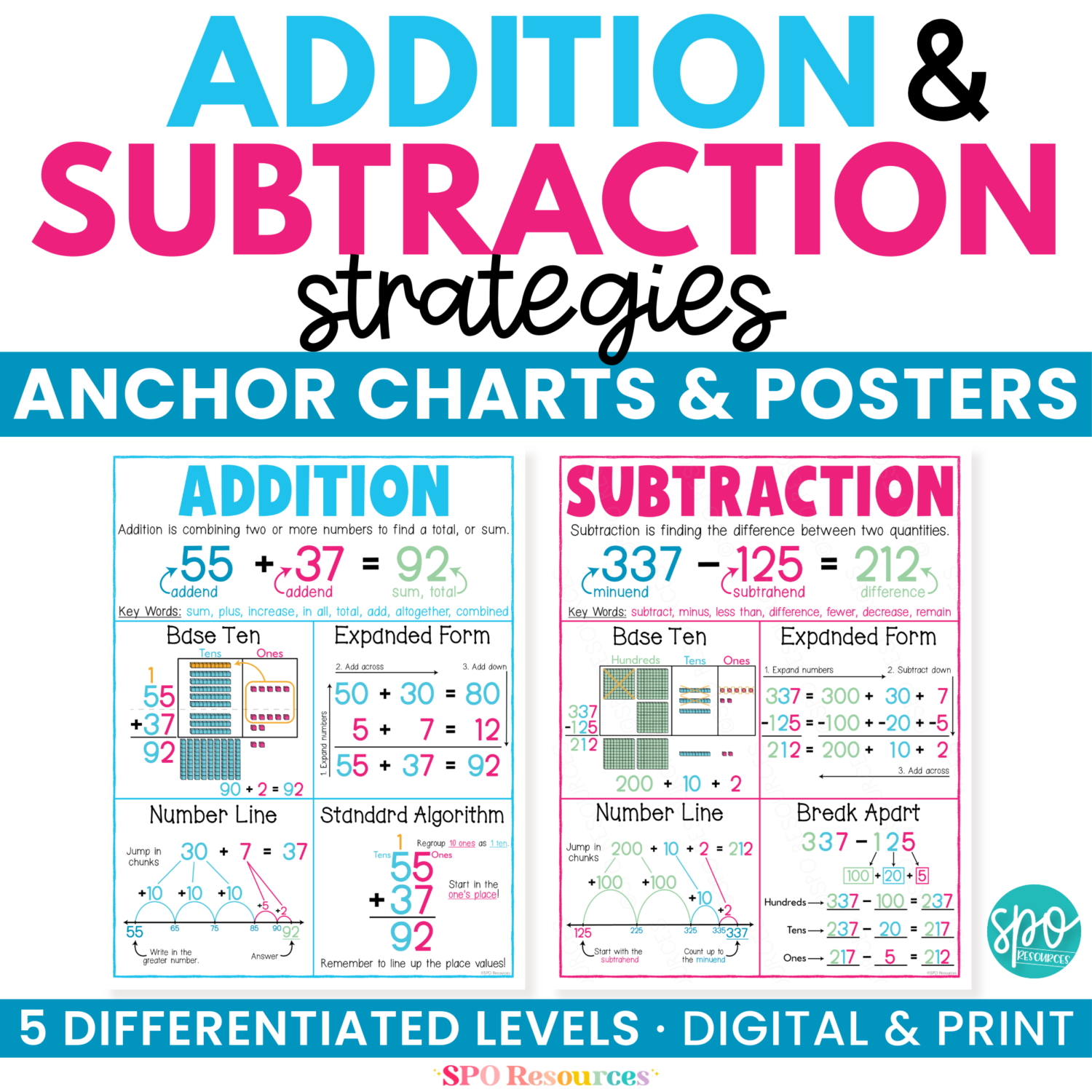
If you’d like ready-to-use visuals for the 2-digit addition with regrouping strategies covered in this post, check out my Addition & Subtraction Strategy Anchor Charts and Posters.

I’m a teacher, creator, designer, and lifelong learner passionate about developing engaging educational resources that save you time, lighten your workload, and inspire your students to think and learn in new ways.
Get classroom ideas, helpful resources, and exclusive freebies sent straight to your inbox.
Pingback: 2-Digit Addition With Regrouping Using Base Ten Blocks