Samantha
September 25, 2026
How to Teach 2-Digit Addition With Regrouping Using Base Ten Blocks
Using base ten blocks to teach 2-digit addition with regrouping is one of my favorite ways to help students understand what is actually happening when they regroup.
Sometimes students follow the steps of the standard algorithm without really understanding what the regrouped 1 represents. Base ten blocks give them a visual model they can connect back to the written algorithm.
Why Use Base Ten Blocks for Addition With Regrouping?
Instead of simply writing a 1 above the tens place, students can actually see that 10 ones have been regrouped as 1 ten.
The goal is not just for students to know where to write the 1. We want them to understand why it belongs in the tens place in the first place.
Start With Place Value
Before you start regrouping, make sure students have a solid understanding of place value.
Students need to understand that the value of a digit depends on where it is in a number.
For example, in the number 25:
The 2 does not represent 2. It represents 2 tens, or 20.
The 5 represents 5 ones.
Base ten blocks make that relationship visible: one tens rod has the same value as 10 ones. Students need to understand that relationship before regrouping will make sense.
How to Teach 2-Digit Addition With Regrouping Using Base Ten Blocks
Let’s walk through the problem:
55 + 37 = ?
Step 1: Build Each Number With Base Ten Blocks
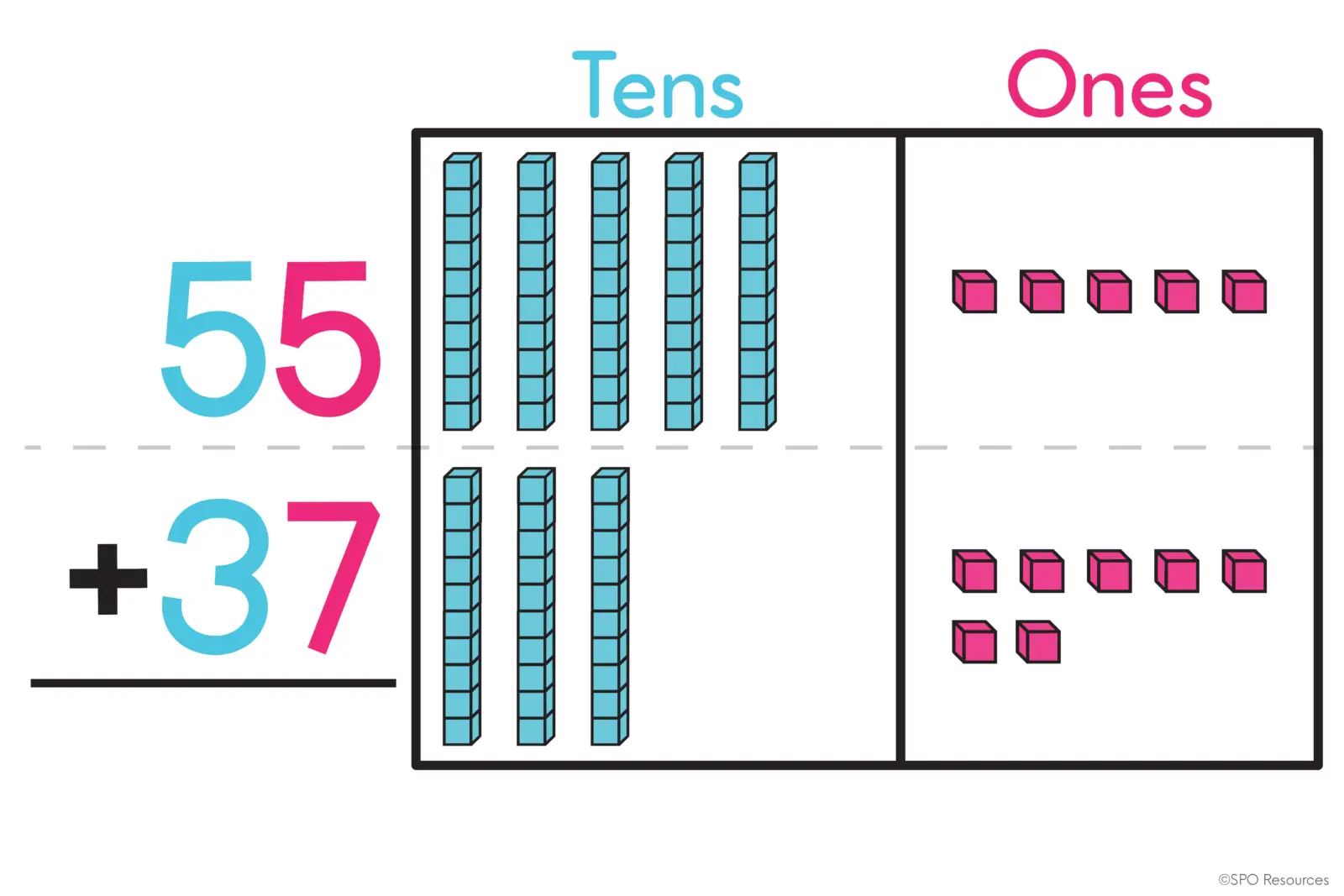
Start by building both addends on a place-value mat.
For 55, students need:
- 5 tens
- 5 ones
For 37, students need:
- 3 tens
- 7 ones
Make sure the tens are placed in the tens column and the ones are placed in the ones column.
Step 2: Combine the Ones
Next, start in the ones place.
There are 5 ones from 55 and 7 ones from 37.
5 + 7 = 12 ones.
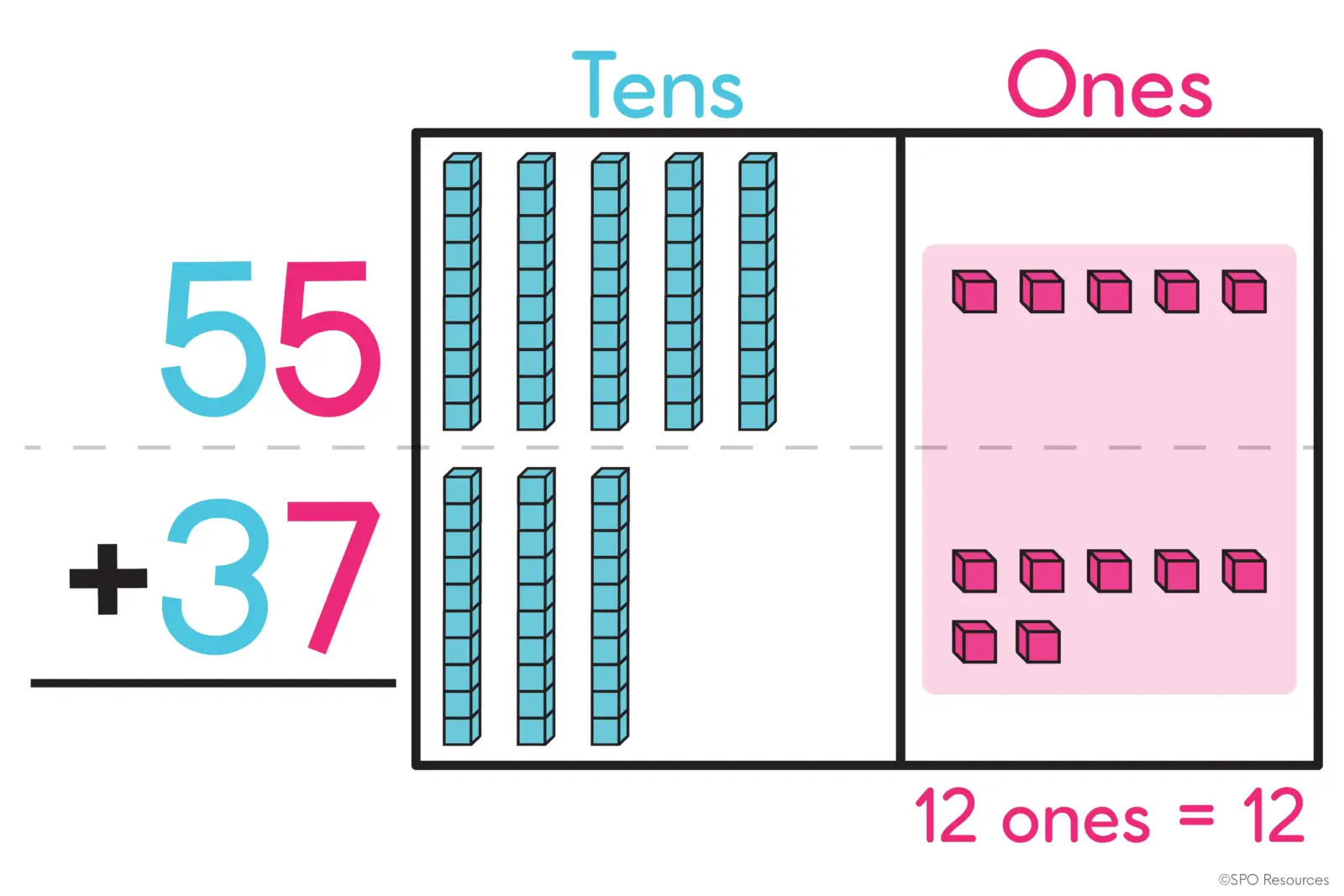
This is where the base ten model becomes especially helpful.
Students can physically see 12 individual ones sitting in the ones column.
But we do not need to leave all 12 there.
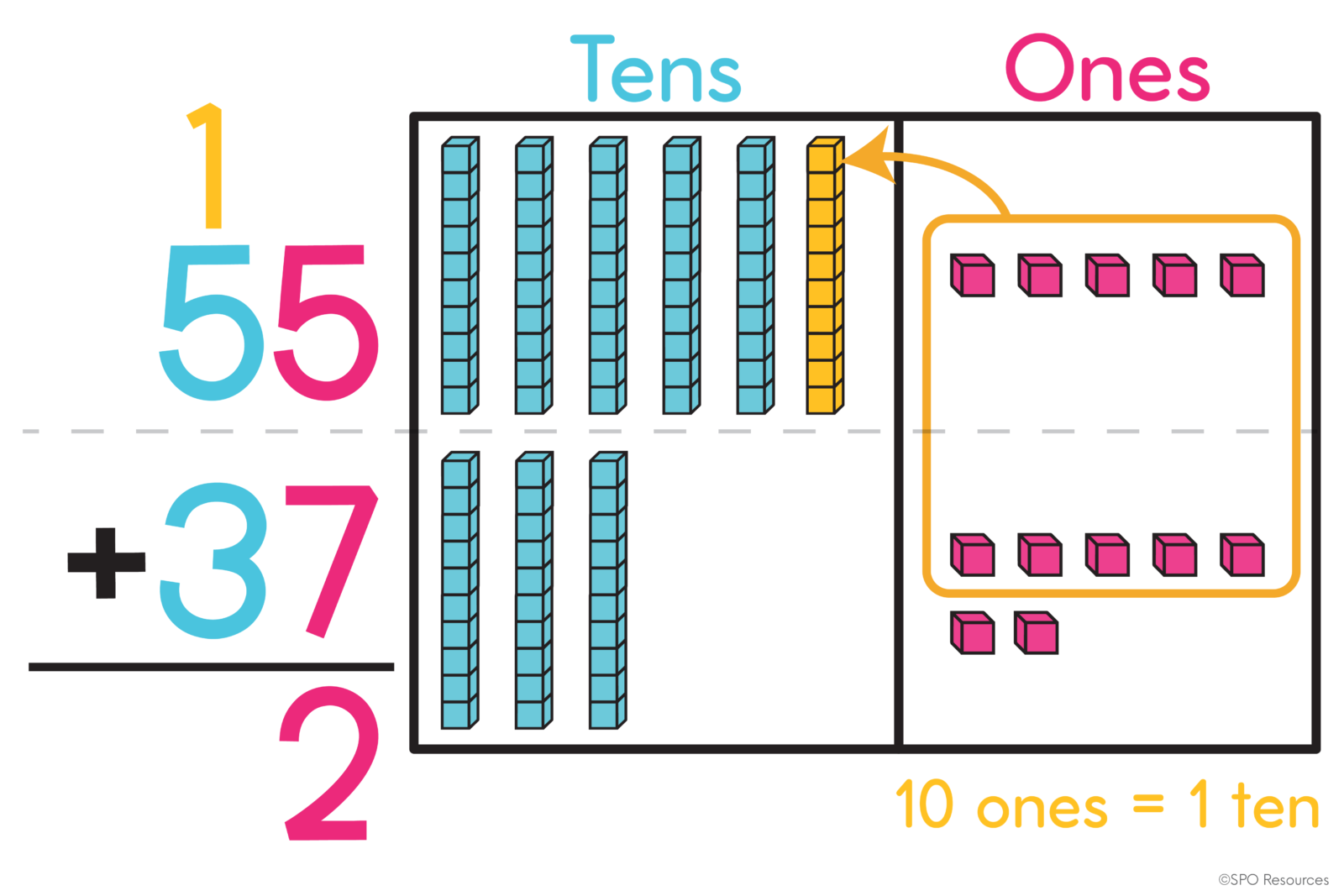
Since 10 ones have the same value as 1 ten, we can regroup 10 of those ones as 1 ten.
I like to make this language really explicit:
We are regrouping 10 ones as 1 ten.
We are not adding anything new to the problem. We are simply representing the same amount in a different way.
You can even have students say it out loud: “I have 12 ones. I can make 1 ten and have 2 ones left.”
Step 3: Move the New Ten Into the Tens Place
Take 10 of the ones away from the ones column and replace them with 1 ten.
That new ten belongs in the tens place because it is worth 10, not 1.
Now there are 2 ones left in the ones place.
Step 4: Add the Tens
Now count the tens.
We started with:
- 5 tens from 55
- 3 tens from 37
- 1 additional ten that we regrouped from the ones
That gives us 9 tens, or 90.
Combine the 9 tens with the 2 remaining ones:
90 + 2 = 92
So:
55 + 37 = 92
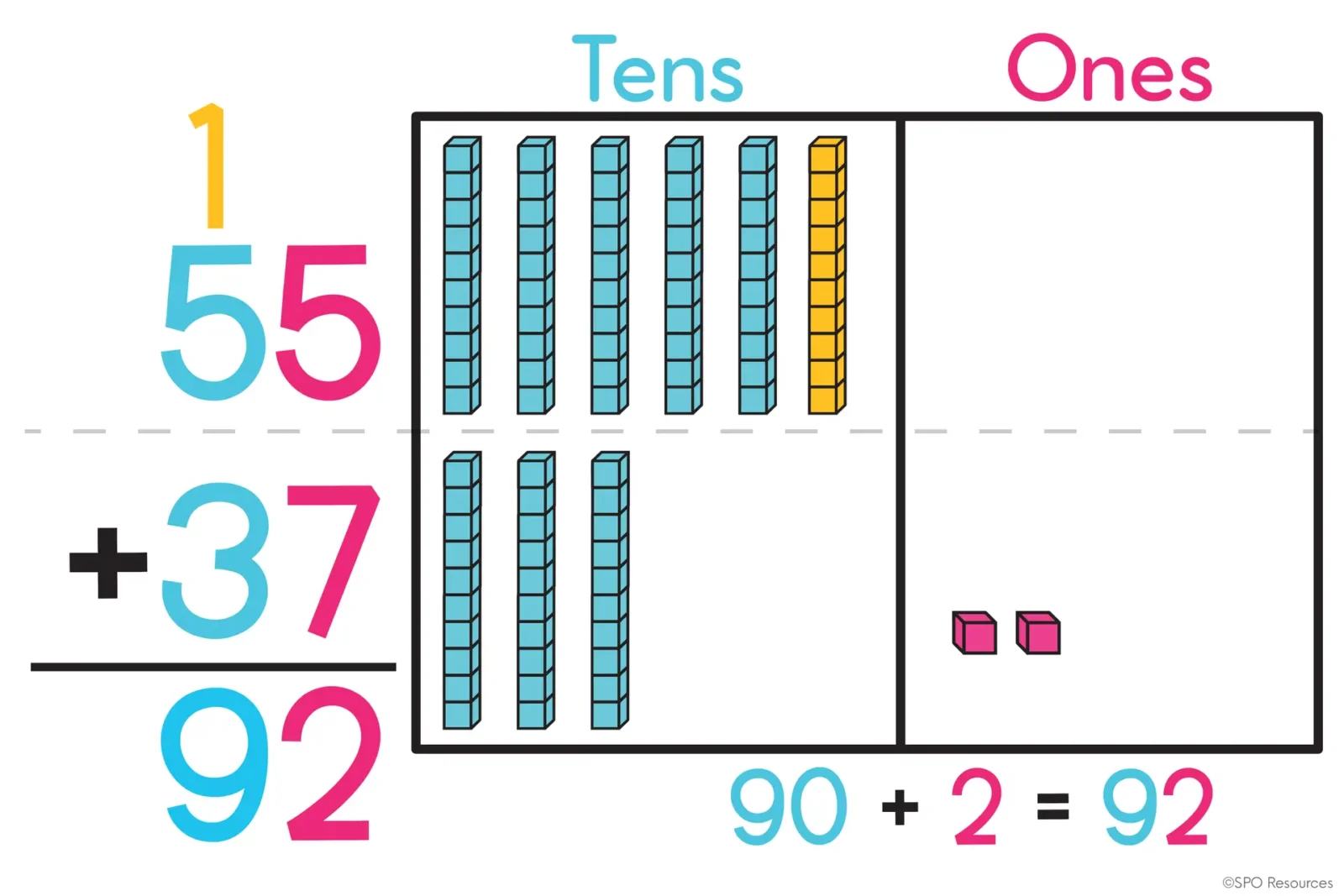
Once students can see 92 on their place-value mat, they are ready to connect the model to the written problem.
Connect the Base Ten Model to the Standard Algorithm
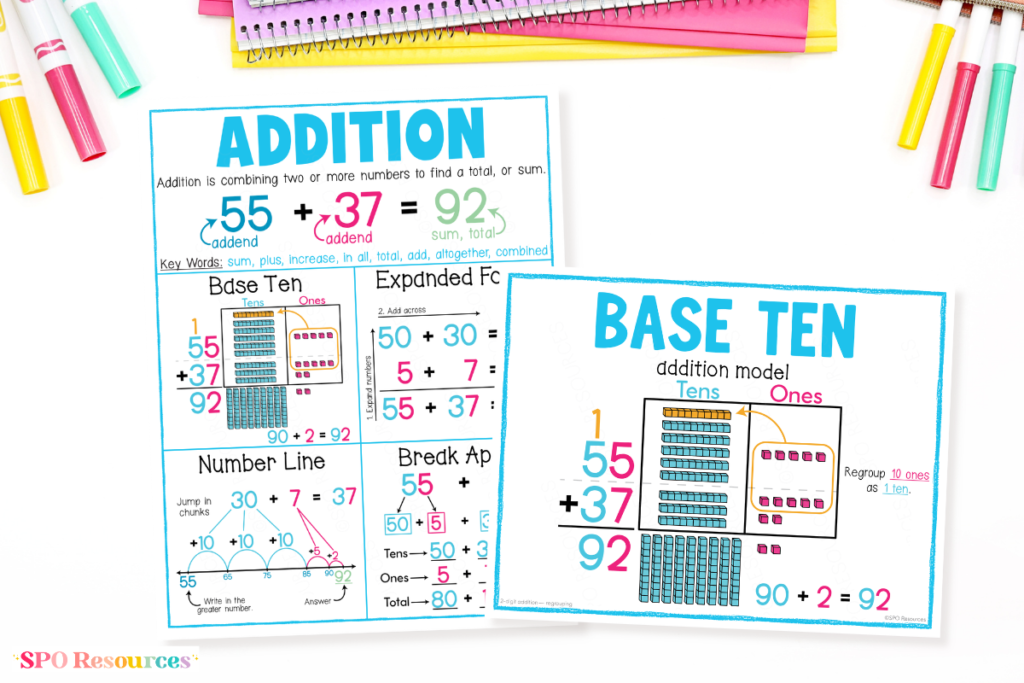
Once students have built 92 with the blocks, show the standard algorithm right beside the model. The 2 in the ones place matches the 2 ones left on the mat. The 1 above the tens column represents the same ten students just made by regrouping 10 ones.
That 1 is not “just a 1.” It is 1 ten.
Now students can add 5 tens + 3 tens + 1 ten = 9 tens. The blocks show what is happening, and the algorithm gives students a more efficient way to record the same thinking.
Watch 2-Digit Addition With Regrouping Using Base Ten Blocks in Action
In the video below, I model a second 2-digit addition with regrouping using base ten blocks example, 26 + 25, from building each addend through connecting the finished model to the standard algorithm.
You could use the video for whole-group instruction, small group, or a quick review.
Common Mistakes Students Make With Addition Regrouping
When students are learning 2-digit addition with regrouping using base ten blocks and the written algorithm side by side, a few mistakes tend to show up again and again.
Mistake: Writing the Whole 12 in the Answer
For 55 + 37, a student adds 5 + 7 = 12 and writes the whole 12 under the ones. Then they add 5 + 3 = 8 in the tens place and end up with 812.
Try this: Have the student build 12 ones with base ten blocks. Ask, “Can you regroup 10 of these ones as 1 ten? How many ones are left?” Once students see that 2 ones remain, it is easier to connect that 2 to the ones place in the written answer.
Mistake: Forgetting to Add the Regrouped Ten
The student writes the 2 in the ones place correctly but only adds 5 tens + 3 tens, so they get 82 instead of 92.
Try this: Point back to the blocks and ask, “Where did the ten you made go? Did you count it?” Having students circle the regrouped 1 before they add the tens can also help them remember to include it.
Mistake: Regrouping Without Knowing Why
Some students start regrouping as soon as they see a big number, without really thinking about the quantity.
Try this: Ask, “How many ones do you have altogether?” Then follow with, “Can we make a group of 10?” Those questions keep the thinking connected to place value instead of turning regrouping into a memorized procedure.
Give Students Practice Connecting the Model and the Written Problem
After modeling 2-digit addition with regrouping using base ten blocks together, students need opportunities to actually use the strategy themselves.
One way to do that is to have students solve the problem with base ten blocks first and then record the same thinking with the standard algorithm.
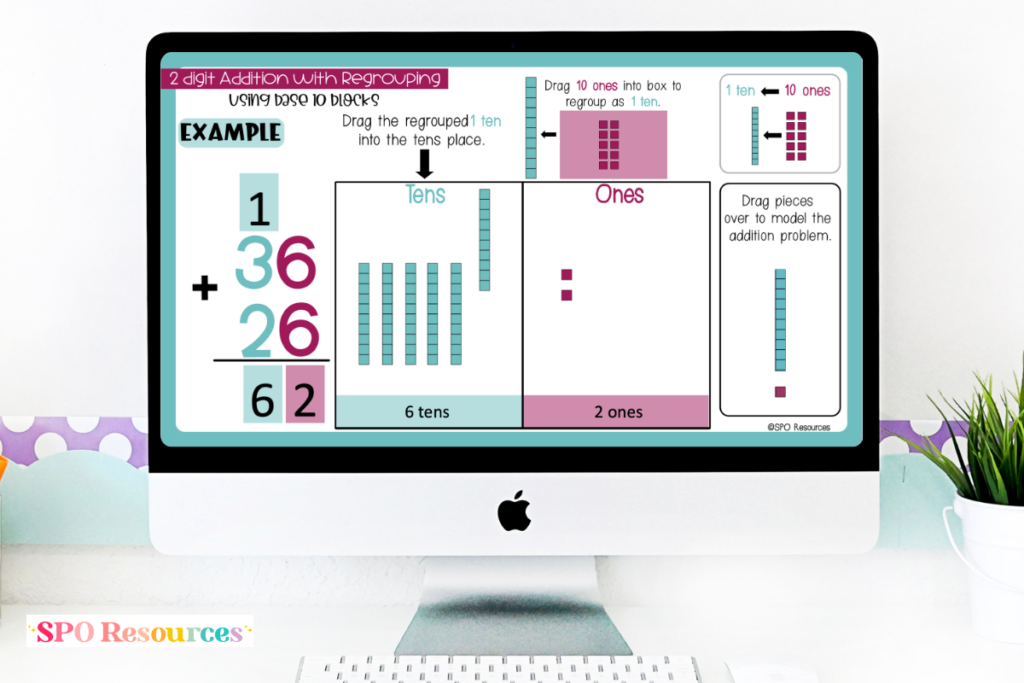
That model-to-algorithm connection is built into the Double Digit Addition With Regrouping Base 10 Blocks digital practice.
Students drag movable base ten pieces onto a place-value mat, regroup when needed, and then complete the written addition problem beside their model.
Practice 2-Digit Addition With Regrouping Using Base Ten Blocks
If you are working with students at different levels, there is also a Double Digit Addition With Base 10 Blocks Bundle with multiple levels of practice, including problems with and without regrouping.
Want to Give Students More Addition Strategies to Try?
Base ten blocks are a great way to make regrouping visible, but they are not the only strategy students can use. Some students may connect more easily with expanded form, break-apart strategies, or another visual model.
Students may also understand a strategy while you are modeling it and then forget part of the process when they start working independently. Sometimes they just need a quick visual reminder to help them get started again.
The Addition & Subtraction Strategy Anchor Charts and Posters give students a visual reference for multiple addition strategies, including base ten blocks, so they can come back to the strategy that makes the most sense to them.
Final Thoughts on Teaching Addition With Regrouping Using Base Ten Blocks
The most important idea is that regrouping does not change the value. When students can actually see 10 ones become 1 ten, the 1 above the tens column represents the new ten they just made.